The Mechanics Behind Pinned and Trapped Switches
The automatic operation of a submersible drainage assembly relies entirely on a simple, physical trigger: the float switch. Whether your system utilizes a legacy tethered bulb or a modern vertical tracking rod, the mechanism depends on unhindered clearance within the basin liner. As groundwater floods the pit, the float must rise smoothly with the water level to close the internal electrical contacts and activate the motor.
However, sump pumps experience intense internal torque every time the motor cycles. Over months of operation, these micro-vibrations cause the unanchored pump body to gradually rotate or walk across the bottom of the basin. Eventually, the float arm shifts close to the rugged plastic or concrete liner wall, pinning the mechanical mechanism and preventing it from rising. The water continues to pour in, but the switch remains trapped in the 'off' position.
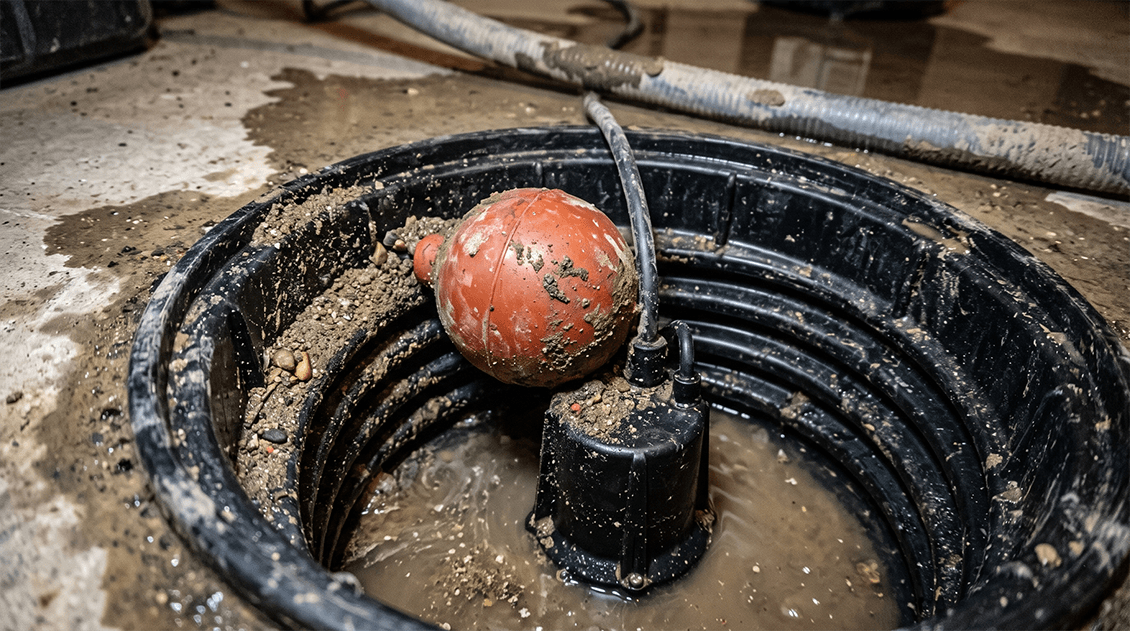 Operational torque shifts the pump housing over time, causing the mechanical float assembly to become pinned against the rugged basin wall and stall operations.
Professional Re-Centering and Torque Stabilization
Fixing a trapped float switch requires more than just pushing the pump back with a stick. Without professional stabilization, operational torque will cause the unit to shift right back against the wall during the next heavy storm cycle. The local crews routed through our network apply permanent structural field corrections:
- Basin Clearance Re-Centering: Extracting the assembly, cleaning the basin floor, and positioning the pump to achieve absolute maximum clearance for all moving operational switches.
- Torque Anchoring Systems: Utilizing heavy-duty stabilization mounts or rigid plumbing alignment connections to prevent the pump housing from walking or twisting inside the liner.
- Electrical Continuity Diagnostics: Testing the internal switch contacts for carbon build-up or moisture entry, ensuring the electronic trigger transmits power flawlessly every single cycle.
The Danger of Intermittent Float Sticking
A pump that works 'sometimes' is a major hazard for residential foundations. If a float switch sticks intermittently, it can leave a lower living area vulnerable during unexpected midnight thaws or sudden rain bands. Our field routing protocols instantly match you with local emergency technicians who carry a complete array of premium replacement vertical switches, heavy-duty float linkages, and stabilization hardware to secure your property's water defense perimeter permanently.