The Physics of Short-Cycling and Electrical Straining
Submersible sump pump motors are engineered to operate in short, intense bursts, allowing the water surrounding the metal housing to pull away excess operational heat. However, during severe Midwestern plains rain cycles, groundwater tables surge erratically. If your drainage basin lacks proper volume capacity or your inline check-valve is leaking water back down into the liner, a dangerous phenomenon known as "short-cycling" triggers.
Short-cycling forces the electric motor to turn on and off every few seconds. Because electric motors draw the highest current (amperage spike) during the first split-second of starting up, rapid cycling prevents the electrical windings from cooling down. The temperature within the hermetically sealed oil chamber climbs exponentially, putting immense stress on the sub-grade wiring layout.
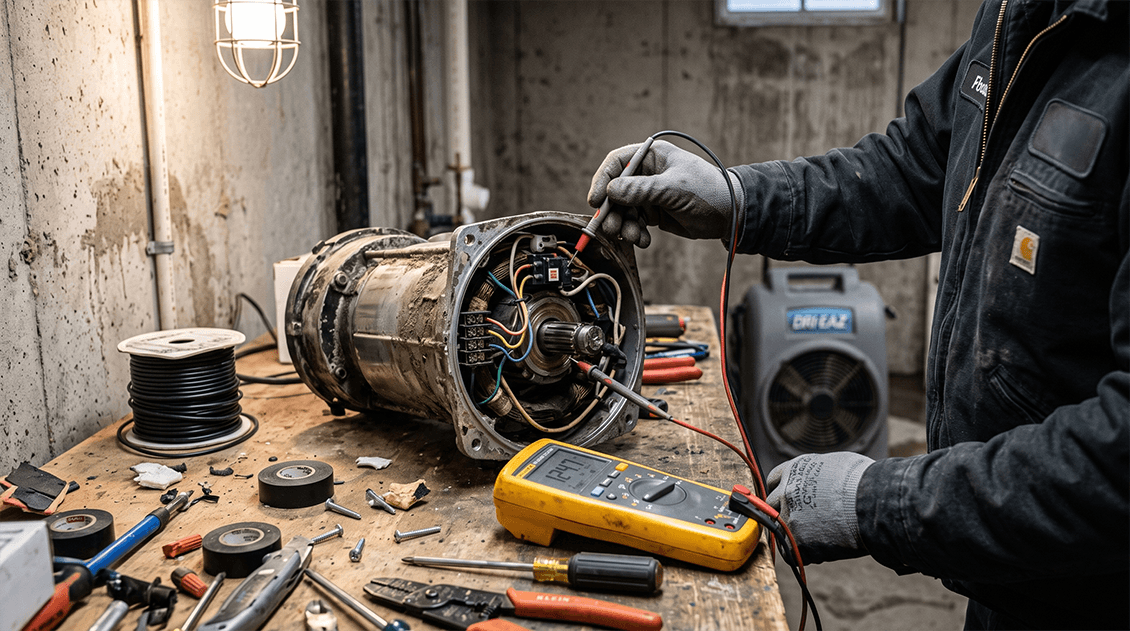 A field supervisor utilizes diagnostic testing meters to evaluate winding resistance and internal thermal protector limits on a stalled drive motor.
Advanced Electrical Evaluation and Safety Switch Resetting
To prevent the motor from melting down or causing a hazardous electrical short beneath your home, manufacturers integrate a thermal overload safety switch directly into the circuit windings. When internal heat crosses critical safety thresholds, this sensor breaks the circuit, cutting power to the impeller drive instantly. The pump goes completely dead, and it will not run again until the core reaches safe temperatures or the faulty sensor is bypassed:
- Winding Amperage Diagnostics: Measuring active electrical resistance using precise multimeters to verify if the copper core windings have fused together or grounded out.
- Capacitor Relay Auditing: Testing the heavy-duty start capacitors which often fail under extreme thermal stress, leaving the motor humming but unable to turn.
- Emergency Temporary Bypass Staging: If the motor core remains structurally intact but the thermal safety sensor remains permanently locked open, field technicians can adapt the power routes to secure immediate, manual sub-grade water evacuation.
The Blind Risk of Waiting for a Auto-Reset
Many property owners assume that a dead, hot pump will simply start working again once it cools down. While some modern automatic-reset units do re-engage after 30-40 minutes of down-time, your basement remains completely unprotected during that cooling window. If the incoming water flow outperforms the passive storage limits of the pit, severe structural foundation breaches occur before the circuit resets. Our central telecommunications grid instantly links your line with local emergency operators equipped with standby replacement trucks to defend your property's lower perimeter without delay.